
FL401 Form
Key Takeaways
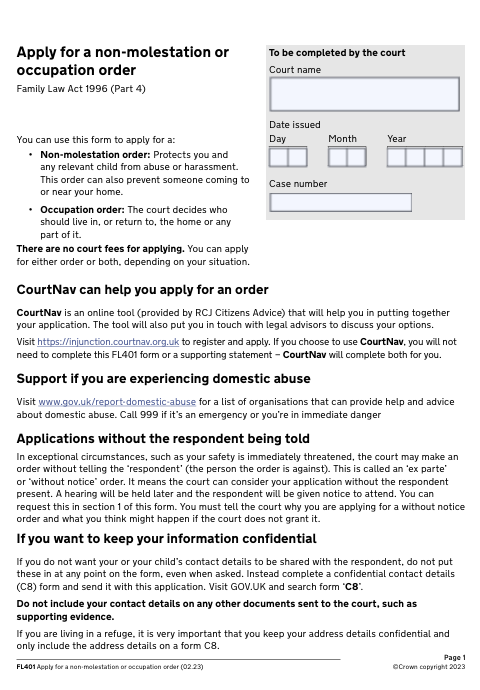
- The FL401 form is used to apply for a Non-Molestation Order and/or an Occupation Order in England and Wales.
- It is commonly used in situations involving domestic abuse, harassment, threats, or controlling behaviour.
- You can apply using an FL401 without the other person being notified if there is immediate risk (known as a without notice application).
- There is no court fee to submit an FL401.
What Is the FL401 Form?
The FL401 is a family court application used to seek legal protection from domestic abuse.
Specifically, it allows you to apply for:
- A Non-Molestation Order (to stop abuse, threats, harassment, or contact), and/or
- An Occupation Order (to control who can live in, or enter, a shared home)
The form is used in England and Wales under the Family Law Act 1996.
In simple terms:
The FL401 asks the court for legal protection from someone whose behaviour puts you, a child, or another associated person at risk.
What Is a Non-Molestation Order?
A Non-Molestation Order is a court order that prevents someone from:
- Using or threatening violence
- Harassing, intimidating, or controlling you
- Contacting you directly or indirectly
- Coming near your home, workplace, or other specified locations
Breaching a Non-Molestation Order is a criminal offence and can result in arrest.
What Is an Occupation Order?
An Occupation Order decides:
- Who can live in a property
- Who must leave
- Whether someone is excluded from certain areas of the home
It can apply even if:
- Both parties own the property
- The property is rented
- Only one party legally owns the home
Occupation Orders are usually time-limited and are often combined with Non-Molestation Orders.
Who Can Apply Using an FL401?
You can apply if you are associated with the respondent, including if they are:
- A current or former partner
- A spouse or ex-spouse
- A family member
- Someone you live with or used to live with
- The parent of your child
The court must be satisfied there is a relevant relationship and a risk of harm.
When Should You Use an FL401 Form?
You should consider an FL401 if you are experiencing:
- Physical violence
- Threats or intimidation
- Coercive or controlling behaviour
- Emotional, psychological, or financial abuse
- Harassment or stalking
The form is often used where immediate legal protection is needed.
Can an FL401 Be Made Without Notice?
Yes. You can ask the court to make an order without notifying the other person first if:
- There is immediate danger
- Giving notice would increase risk
- You fear retaliation
If granted, the court will usually:
- Make a temporary order
- List a follow-up hearing where the other party can respond
Do You Need a Supporting Statement?
Not necessarily, but you may need a supporting statement if the section on the FL401 is not big enough to contain your statement.
- The FL401 includes a statement section where you set out the abuse, risk, and why you need the order
- That section counts as your witness statement and is sworn/verified
- In many cases, no separate supporting statement is required
However, a separate supporting statement may be needed or helpful if:
- You don’t have enough space in the form
- There’s a long history or multiple incidents
- You’re asking for an Occupation Order as well as a Non-Molestation Order
- The court asks for further detail
- You’re making a without-notice (urgent) application
If you do attach one, it should:
- Be clearly titled “Witness Statement in Support of FL401”
- Stick to facts (what, when, where, impact)
- Be signed and dated, with a statement of truth
Click the button below to download the supporting statement template.
Is There a Court Fee for an FL401?
No. There is no fee to apply for:
- A Non-Molestation Order
- An Occupation Order
This applies whether or not you use a solicitor.
How to Complete the FL401 Form
The FL401 form asks for detailed but structured information.
Key Sections Explained
Your Details
- Your name and contact details
- Option to keep your address confidential if safety is a concern
Respondent’s Details
- Name and last known address
- Any known risks (weapons, threats, prior convictions)
Relationship Information
You must explain how you are legally or personally connected to the respondent.
Details of Abuse
This is the most important section.
You should include:
- What happened
- When it happened
- How often it occurred
- How it affected you (and any children)
Stick to clear, factual descriptions rather than emotional language.
Orders Requested
You must specify whether you are seeking:
- A Non-Molestation Order
- An Occupation Order
- Both
You can also explain whether the application is urgent or without notice.
Do You Need Evidence?
Evidence is helpful but not mandatory.
Supporting evidence may include:
- Police incident numbers
- Medical records
- Screenshots of messages
- Witness statements
- Previous court orders
The court can make orders based on your statement alone if it believes protection is needed.
What Happens After You Submit an FL401?
- The court reviews the application
- An urgent hearing may be listed (often same day)
- Temporary orders may be granted
- The respondent is served with the application
- A full hearing is scheduled if needed
If an order is granted, breaching it can result in police action.
How Long Do Orders Last?
- Non-Molestation Orders typically last 6–12 months, but can be extended
- Occupation Orders are usually shorter and depend on housing circumstances
The court can vary or extend orders if risk continues.
Common Questions About the FL401 Form
Do I need a solicitor?
No. Many people complete and submit an FL401 themselves, or use specialist services such as FamilyLawForms to help prepare the form without solicitor costs.
Will the other person find out?
Only if the court orders service — and in urgent cases, this happens after protection is in place.
Can FL401 protect my children too?
Yes. Orders can include provisions protecting children from harm or exposure to abuse.
Is lying on an FL401 a crime?
The form is a sworn statement — knowingly providing false information can have serious legal consequences.
Practical Tips for FL401 Applications
- Be specific with dates and behaviour
- Focus on patterns, not just one incident
- Include children’s exposure where relevant
- Use the confidentiality options if needed
- Ask for without-notice protection if safety is at risk
Conclusion
The FL401 form is a critical legal tool for people experiencing domestic abuse or serious harassment. It allows the family court to act quickly, provide protection, and prevent further harm — often without delay and without cost.
Used properly, an FL401 can offer immediate safety, legal backing, and peace of mind at a time when protection matters most..